.svg)
Overview
System Admins are responsible for managing user roles within the Mend Platform. This document provides a technical guide for System Admins to control and configure user roles effectively.
After assigning all relevant users to a particular group, you can assign a role to the group which will apply the required permissions to all its users.
Mend Platform Roles and Permissions
|
Role |
Permissions |
|---|---|
|
Admin |
Organization Admins have full access to all features and configurations within the organizational scope. This includes user and group management, labels, scan configurations, applications, and projects. They can:
Application Admins can also create workflows, but only within their assigned application(s). These workflows are application-scoped and separate from organization-wide workflows defined by Org Admins. |
|
Security Analyst |
Security Analysts are responsible for the triage process of all security findings. They can review scans & findings data and take the needed actions to either resolve issues or suppress if needed. |
|
Scan Manager |
Scan Managers can execute security scans using Mend CLI or through the Repository Integrations. They can configure and change the organization structure by adding new applications/projects and making the needed structure changes. |
|
Member |
Members have access to Mend Platform for viewing purposes. They can review all available data in dashboards and drill-down to visualize projects, scans, and security findings data. Members can’t access administration or configuration capabilities and can’t impact data with actions. |
|
Legal Analyst |
Legal Analysts can manually override license and copyright assignments that were applied automatically during analysis. |
|
Auditor |
Auditors have read-only access to Mend data without the ability to modify data or change settings in the platform. Use for integrations (service users), automations, or users who only need visibility. |
Understanding Application-Scoped Roles and Default Group Access
By default, the built-in Admin and User groups grant their members access to all applications in the organization. However, this default behavior changes when application-scoped roles are introduced.
How Application-Scoped Roles Affect Default Access
When an application-scoped role is added to the Admin group, the default broad access for all other groups - including the default User group - is removed. After this point, users in those groups will no longer have access to any applications unless access is explicitly granted.
What this means in practice:
-
Once any application-scoped role exists in the Admin group, users in the User group (and any other non-admin groups) lose access to all applications.
-
To restore access, an application-scoped role must be explicitly added to each affected group for every application that group needs to access.
-
This behavior applies to the default User group and to any other custom non-admin groups.
Getting it done
Assign a Role to group(s)
-
Log into the Mend Platform.
-
Click the settings gear in the top right corner of the page.
-
Click Administration.

-
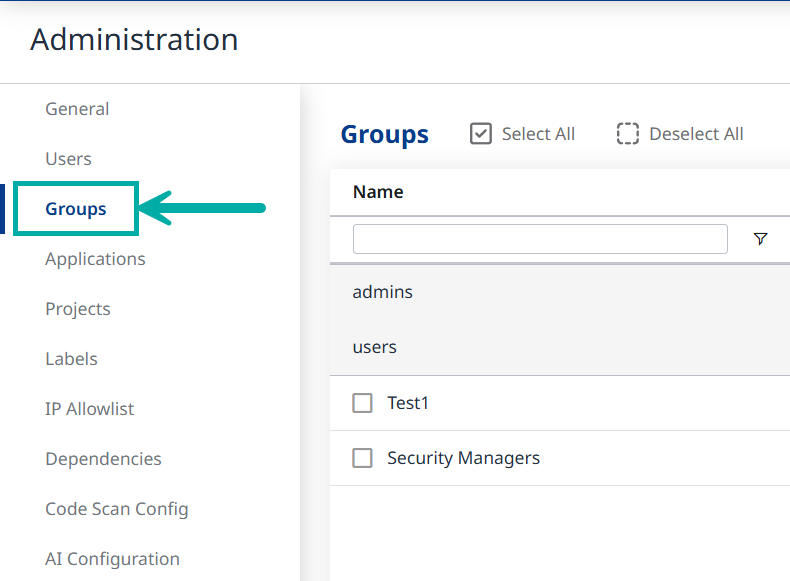
Click Groups in the Administration menu on the left.
-
Click on the group name you would like to assign roles for.
-
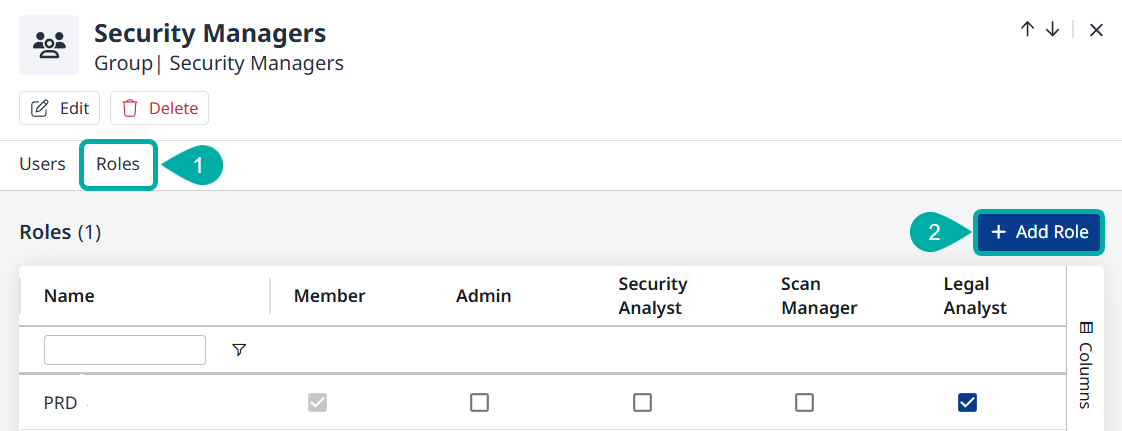
Click the Roles tab and then the + Add Role button.
-
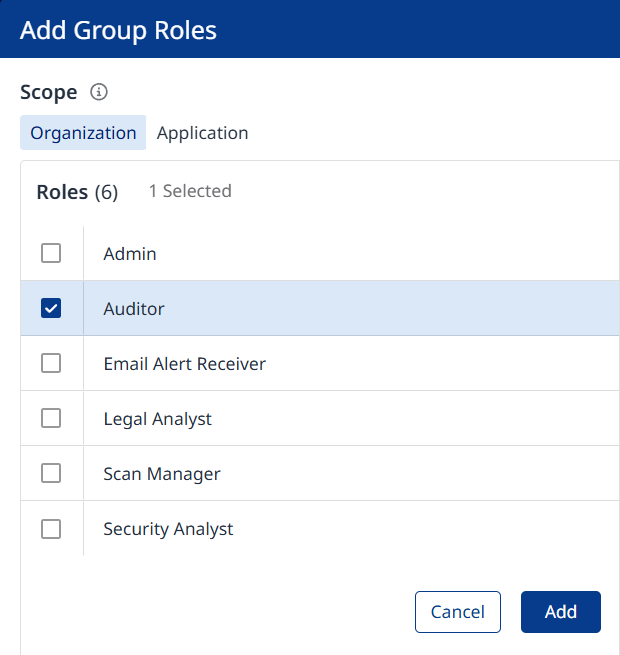
Select which roles to assign to the selected group. The roles can be assigned at the Organization level or a specific Application. Click the Add button to confirm your selection.
Delete Group Role
-
Select the relevant group in the Groups table.
-
Click Roles.
-
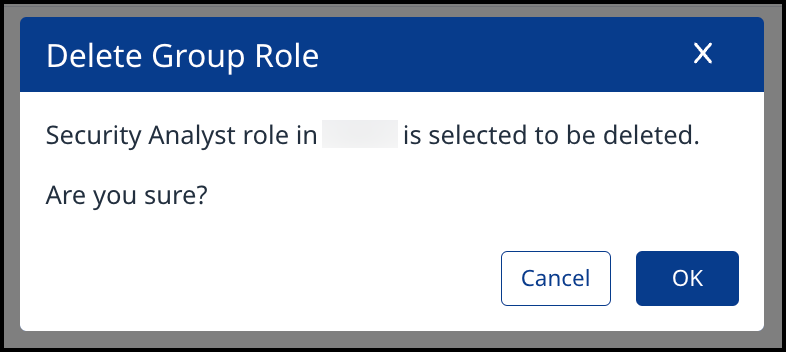
Unselect the role you would like to delete from a specific group.
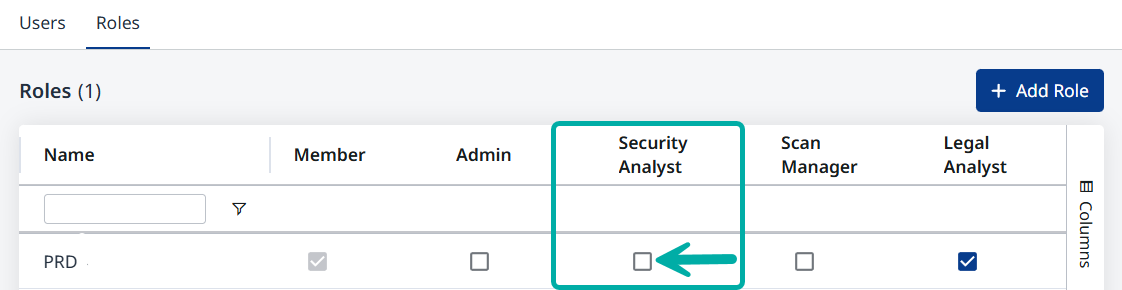
-
Click on the “OK” button in the pop-up message window to delete to Group Role.